strap leaf philodendron Philodendron schmidtiae – Thin, Ribbed Strap LeavesPhilodendron schmidtiae Massive Leaves and Amazonian Texture Why Philodendron schmidtiae is worth growing Philodendron schmidtiae is one of those species that instantly commands attention not with loud colours, but with sheer structure. Its enormous, broad leaves stretch over 90 cm long in maturity, with a smooth yet slightly pustular surface, a subtly glossy finish, and a strong central sinus that makes the whole plant feel sculptural. Young growth
Philodendron schmidtiae – Massive Leaves and Amazonian Texture
Why Philodendron schmidtiae is worth growing
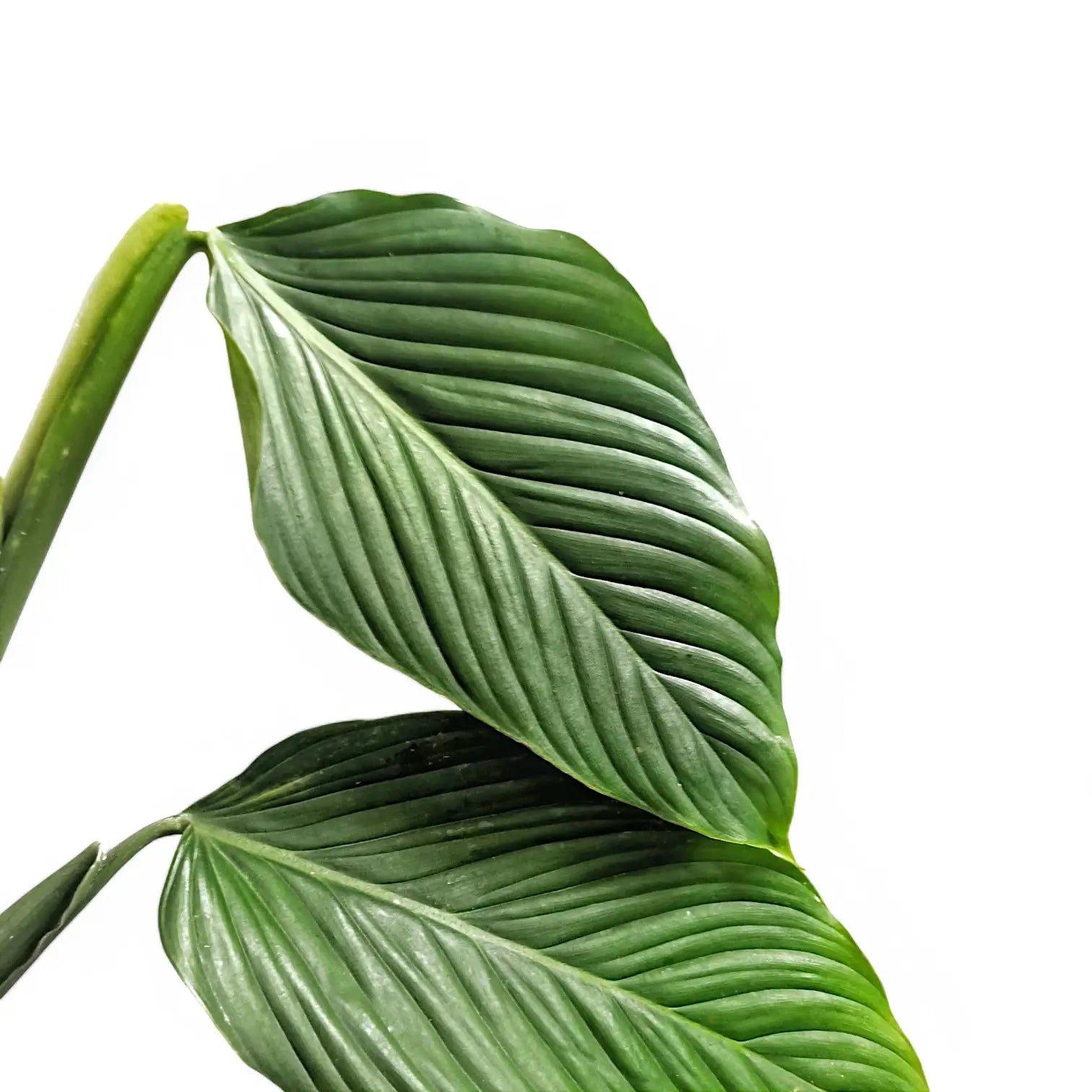
Philodendron schmidtiae is one of those species that instantly commands attention – not with loud colours, but with sheer structure. Its enormous, broad leaves stretch over 90 cm long in maturity, with a smooth yet slightly pustular surface, a subtly glossy finish, and a strong central sinus that makes the whole plant feel sculptural. Young growth may show hints of purple at the petiole and base, while mature leaves settle into a deep, velvety green with slightly darker margins and rich venation. Native to the lower Amazon, this species thrives when given warmth, space, and humidity. It’s bold, architectural, and full of rare character.
Leaf traits and physical structure of Philodendron schmidtiae
-
Enormous, ovate leaf blades up to 94 cm long and 82 cm wide
-
Posterior lobes overlap slightly with a closed to obovate sinus
-
Dark green glossy surface with light pustules and speckling underneath
-
Cataphylls up to 45 cm long, fibrous and persistent at upper nodes
-
Petiole violet-tinged at apex, ribbed and firm, up to 66 cm long
Habitat details and indoor growth of Philodendron schmidtiae
This species is native to the Amazonian region of southern Colombia and Ecuador, found at lower elevations around 300 m above sea level. It grows as a hemiepiphyte or terrestrial plant on steep slopes, often in deeply shaded, humid forest undergrowth. The plant produces dark purple-brown sap and develops into a substantial presence, with stems up to 1.5 m long and internodes ranging from compact to stretched depending on age. Indoors, it can reach over 1 m in height and needs space to spread its large blades without crowding. Toxicity: Philodendron schmidtiae contains calcium oxalate and should be kept away from pets or children to prevent ingestion-related issues.
Philodendron schmidtiae care tips
-
Placement: Choose a bright spot out of direct sunlight for best leaf development
-
Light: Bright, indirect light is ideal; can tolerate lower light but leaves may reduce in size
-
Water: Water when the top few cm of soil are dry – avoid both soggy and bone-dry soil
-
Humidity: Needs high humidity (60 – 90%) to prevent leaf edge crisping
-
Temperature: Keep between 20 – 28°C, avoiding cold drafts or dips below 16°C
-
Soil: Use a breathable aroid mix with bark, coco chips, and perlite
-
Repotting: Every 2 years or when the roots press against the pot wall
-
Fertilizing: Apply a balanced liquid fertiliser every 2 – 3 weeks during active growth
-
Propagation: Propagate via stem cuttings with a node; allow callus formation before planting
-
Hydroponics: Can adapt to semi-hydro setups with careful transition
-
Pruning: Trim older or damaged leaves to free space and encourage new foliage
Problems and fixes for Philodendron schmidtiae
-
Yellowing leaves: May signal overwatering – check soil compaction and drainage
-
Fungus gnats: Common in damp soil – let topsoil dry and use sticky traps
-
Spider mites or thrips: Appear in dry air – wipe foliage and treat with neem or insecticidal soap
-
Leaf edge browning: Often from low humidity or high mineral build-up – adjust care routine
-
Slow growth: Normal for this species but improves with high humidity and warmth
Extra notes for growing Philodendron schmidtiae successfully
This plant is best grown in a stable spot where it won’t need frequent moving – its large leaf spread makes relocation tricky. It doesn’t need a climbing pole but appreciates a sturdy base, as the stem can stretch over time. The reddish tones in the petiole and central midrib are strongest in younger leaves and gradually fade, adding to its shifting, layered aesthetic. Understanding how this species grows in the wild – hugging steep Amazonian slopes under dense canopy – will help you match its need for shade, airflow, and moisture. It prefers a consistent microclimate and rewards steady care with spectacular foliage.
Etymology and botanical history of Philodendron schmidtiae
The genus name Philodendron comes from the Greek “philo” (love) and “dendron” (tree), pointing to the genus’s general climbing tendency. The species name schmidtiae honours the contributor associated with the plant’s discovery or classification. It was formally described by botanists Thomas B. Croat and Cerón in 2013 in the journal Aroideana.
Buy Philodendron schmidtiae before it's gone
This rare Amazonian beauty doesn’t come around often. Order your Philodendron schmidtiae now and grow one of the largest-leafed Philodendrons in your home collection.
 ,
,
 and
and

 Promo Codes Available: